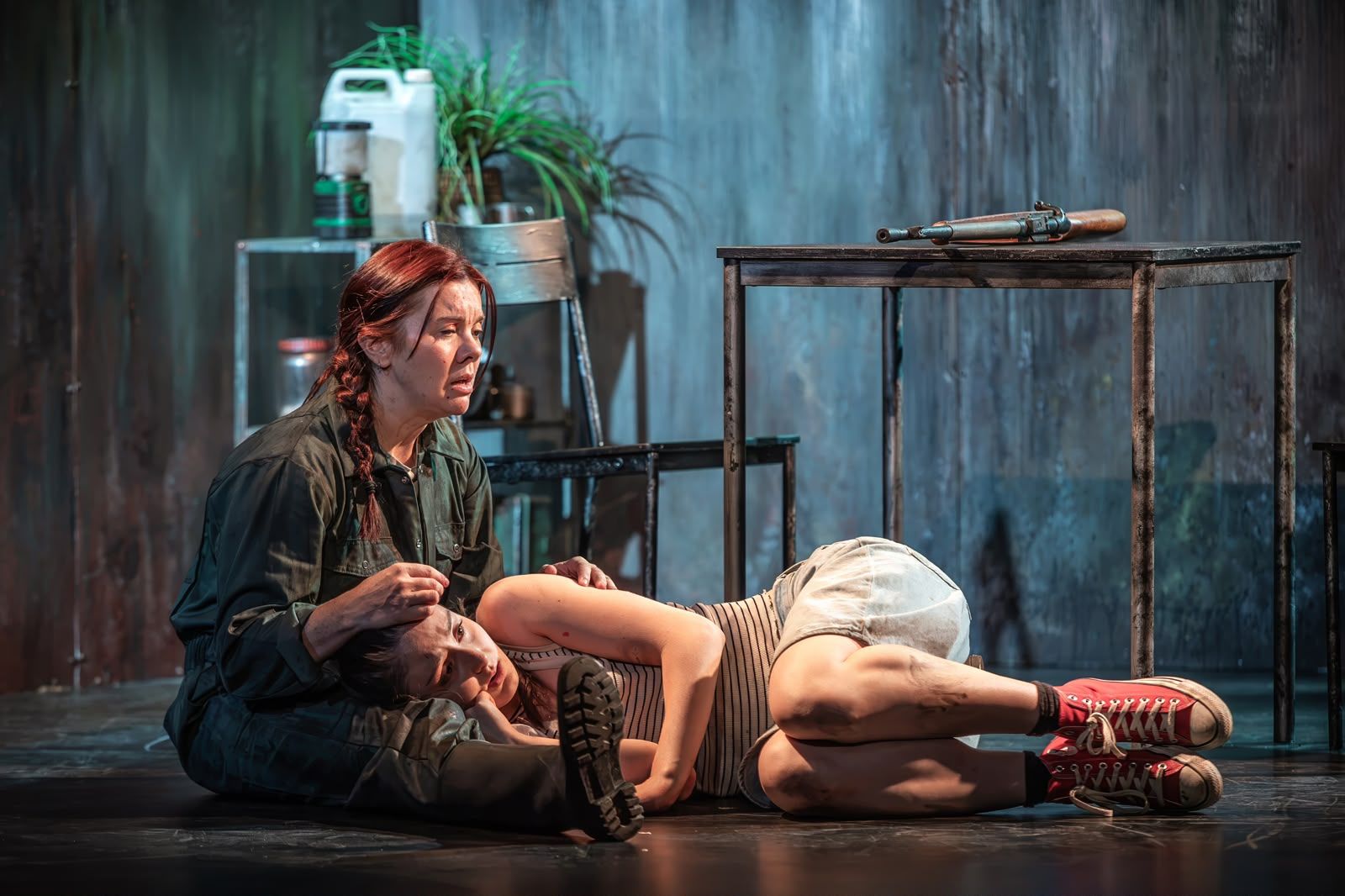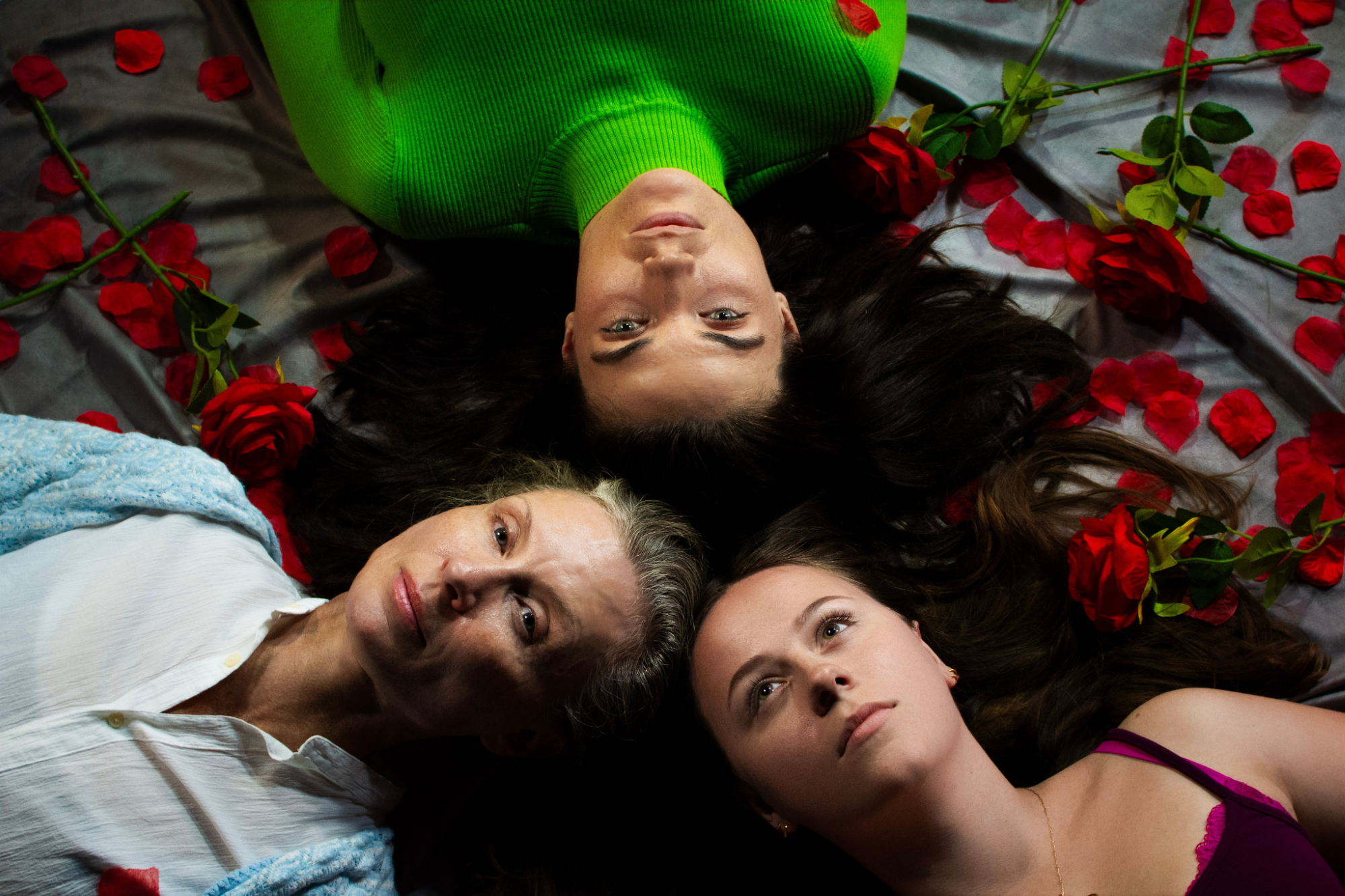

Photo credit – Laura Roque
Love is very complicated, and The Love That I’ve Lost undoubtedly demonstrates that. Written and directed by Morgan Clarice, The Love That I’ve Lost follows three generations of women: Lillie (Harriet Spence-Reid), Michelle (Amelia Dunn) and Betty (Nina Anderson), as they navigate their complex love lives. Lillie, the youngest of the three, is new to dating and struggles with the rejection that can come with finding the right person. Her mother, Michelle (though difficult to believe with the age gap not seeming believably big enough), is going through a messy divorce, finding it hard to move on when she is still so in love. Betty’s husband is suffering from dementia, and so despite still being in a long-term relationship, she feels a lack of love as a result of feeling him slowly slip away from her, without him actually going anywhere. The women clash over their struggles, failing to understand how their experiences are more similar than they think. With Valentine’s Day fast approaching, it is Michelle’s idea of hosting a ‘Galentines’ party for the three of them that ultimately brings the family back together.
Clarice’s writing successfully covers three contrasting but equally valuable examples of how love can tear people apart, just as much as it can bring people together. As much as the play was focused on the negative side of dating and the vulnerabilities of being in love, the play needed more light amongst the shade. The emotionally charged scenes would have been more effective if there were fewer of them, as there is only so much hopelessness an audience can listen to before you begin to lose their attention. The ending was sweet, and it was lovely to see the characters come together, but the moment was too fleeting and deserved more focus if Clarice wanted the audience to feel the full extent of the character arcs. The monologues were effective in giving us insight into the feelings beyond what the women were willing to say to anyone else. Having said that, there is something very effective about saying less and showing more. It would have been more compelling to have had fewer monologues and instead, more scenes of dialogue between the three, where the characters were inclined not to voice explicitly how they feel. This way the audience are left to fill in the gaps themselves a little more. An exception to this, however, was Harriet Spence-Reid’s monologue where she came home drunk and had an emotional moment speaking to the kitchen bin about feeling unwanted and unloved. This was the standout moment from the show and was extremely effective. Spence-Reid performed this excellently and had the audience’s attention in the palm of her hand. She believably played a teenager who, on the one hand, is still relatively childlike and playful, but on the other, is quickly growing up and discovering who she is and, more importantly, whom she wants to be.
All three actresses were relatively consistent throughout, but in such an intimate venue, sometimes the performances were a little exaggerated and less believable. However, some of the more comedic moments were very successful and did have the audience laughing out loud. It was a little confusing as the actresses all had different accents, with Dunn’s being notably far more well-spoken than the others. If the differing accents were an active decision, then it needed to be explained; otherwise, it made it a little difficult for the women to believably feel they formed a cohesive family.
The direction could have been more succinct, with the audience being completely in the dark about the length of time this play spans, as well as which of the women actually live in the property. The space was used effectively, with the steps up to the audience being used to expand the parameters of the home and bring the audience closer to the characters and the story.
The set was uncomplicated and successfully reflected a believably lived-in space. The lighting design by Amelie Beaver was also simple, with a warm pink light being used when the characters were describing their more fond memories and a cold white light when their relationships became more tense. Despite it being quite basic, the play did not require anything more, and it fit the naturalistic nature of the play very well.
The Love That I’ve Lost absolutely has potential, and Morgan Clarice should be very proud to have both written and directed this play. The story is relatable and an important one to tell, but it needs more emotional variation for it to take full effect and make a real impact on its audience.
The Love That I’ve Lost played at The Bread And Roses Theatre on the 8th and 9th of October 2026 as part of Lambeth Fringe.
https://lambethfringe.com/events/the-love-that-ive-lost
Reviewer: Holly-Lily
Date reviewed: 9th October 2026