
Photo/artwork credit – Len Schaffert
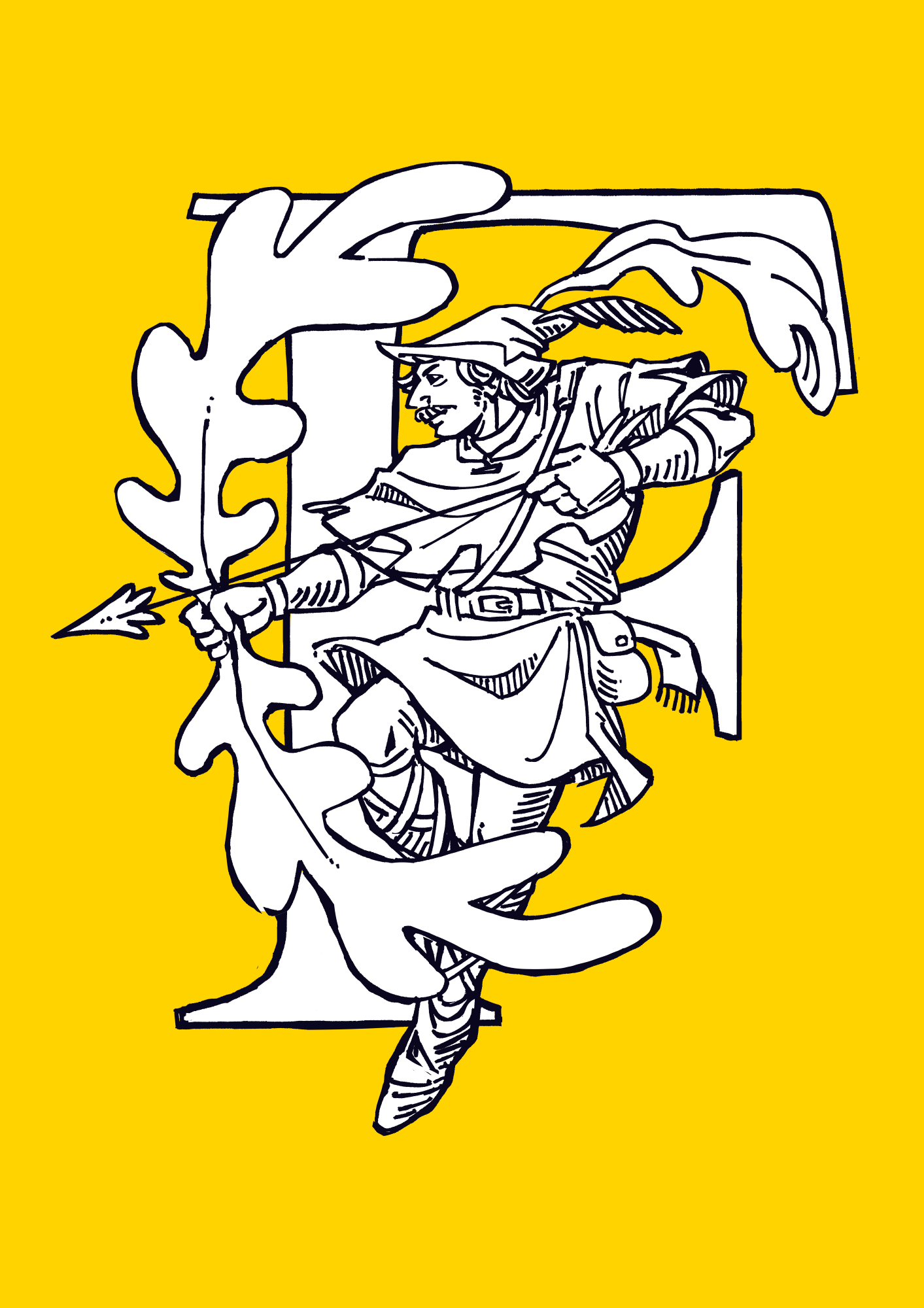
If you are wondering what to do with yourself after the buzz of Christmas and New Year has worn off, look no further than Chronic Insanity’s site specific immersive experience Folklore: The Trials of Robin Hood. As the name suggests, you can immerse yourself into the world of Nottingham’s hero Robin Hood in the atmospheric National Justice Museum. Theatre Muse’s founder Caroline Worswick, caught up with Chronic Insanity’s Artistic Director Joe Strickland, to find out more about directing such an ambitious project.
Folklore: The Trials of Robin Hood is an immersive experience. May we begin by looking at the storyline (without spoilers) that gives the audience some background before they immerse themselves into the experience?
Our story begins because of the death of the Major Oak, the living thing with the last memory of Robin Hood. Now that nothing remains alive that can remember him, he must pass into either the world of history or the world of folklore and, when the Lords of these realms can’t reach a consensus on where Robin deserves to end up, the choice passes to the audience. They then see a cavalcade of witnesses from throughout British folklore and history and eventually decide where Robin’s soul will rest or reside, with their choices and actions meaningfully effecting the story in a number of ways.
Can you explain the experience, and what options the audience have to explore and investigate?
The audience can watch the main trial in the Crown Courtroom, even becoming a part of the jury if they like. They can also watch a number of different short trials in Small Claims Court next door, or they can move through the roughly 100,000 square foot museum exploring folkloric and historic characters from over a millennia of the British Isles. You will move past buskers and hide from ghosts and ghouls. They can try and find witnesses for the trial, reunite the merry men, or join one of our seven factions of characters and complete quests for them to increase their influence over the results of the court. You can also enjoy a series of different crafts, games, and puzzles spread throughout the themed space, finding artefacts, racing gnomes, and all manner of other fun activities.
Chronic Insanity are taking over the whole five floors of the National Justice Museum. Can you explain how the building fits into the experience, and do you need to adapt the space to suit your needs? Is the experience accessible for people with disabilities?
We work a lot with site-specific and site-sympathetic theatre making practices, so our show is designed specifically for the museum, to fit into its five hundred plus years of historic spaces and to make the most of every corridor, court room, cave, and cell. To adapt the physical characteristics space would interfere with the very thing that we love about it, with the changes of ambience as you move through the space being built into the show, alongside an amazing costume design, thoughtful lighting, and an originally composed soundtrack. The benefit of being in an established museum space is that they do have good access provisions even with the age of the building, with lifts throughout the venue, stage managers to assist people in every major location, including a dedicated access manager, and our show being adaptable so that if you can’t get to or experience a part of the show then the show can adapt to, and come to, you!
The audience have five floors to explore; how do you manage their experience, given that they only have a certain amount of time to investigate?
We make sure that there is enough going on, that enough paths of story and activity exist to be found and/or directed to, and that all of it is intrinsically tied together, so that no matter where audiences wander, engage, or find themselves they all end up with different but equivalent experiences. This is not an experience that you can see everything of in one night, with somewhere between 20-30 hours of story in one 3-hour show and the show evolving over the course of the month-long run depending on the audience’s behaviour. If you want to be an active audience member, then you can get anything you want out of the show. If you want to sit and watch an entertaining and enlightening performance without moving about, then choose a court room and the story will come to you. There is something for everybody!
As the director of the experience, what are your duties, and how do they differ from directing a play, for example?
When I direct a play, I am working with a handful of characters, a blank canvas of a stage, a technically equipped theatre space, a single thread of narrative, and an audience that knows pretty much what to expect from their experience. With this sort of show we have 60+ performers, multiple different spaces to stage the show in, a more punk/DIY approach to technical enhancement, a sandbox of a story for audience to play with how they want, and an audience that has no idea what to expect so you have to put enough guard rails in place to help encourage people to play while not having so much that it restricts those who are more confident with immersive or interactive work. Also, directing a play is more autocratic, where the director gives instruction and it is followed, whereas this experience has many more communal and anarchist elements to it where every performer is given initial instructions, trusted to build their character and find connections with other characters and bits of the story, and the world is born out of those explorations. My role is much more to keep everyone’s creativity on track other than to dictate what everyone should be doing.
You have potentially fifty performers to cast and manage. How do you intend the performers to interact with the audience, and will they be working from a basic script and then improvising the interactions?
We have scripted scenes in the main courtroom spaces, but other than that the rest of the interactions throughout the museum will be largely devised and improvised with the audience each night alongside pre-planned route and paths, but with enough room for creative inspiration to go in a new direction if the opportunity arises. Fortunately, Nottingham is home to one of the best improv scenes in the UK and the combined improv experience of our cast is massive, so the audience is in safe hands! This approach also allows us to work with the audience and build their ideas into the story of the show, not just give them a limited number of options to pick from for their interactivity.
With a large number of performers involved this sounds like an expensive project. How do you manage the project financially?
We have funding from Arts Council England to cover all the production costs for the shows and then our performers are working on a profit share basis, where every ticket sold gets split between everyone working on the show. We also have a lot of in-kind support from other arts and culture venues around Nottingham, so we save a lot of money on rehearsal space, storage, equipment, etc. One of the benefits of making this sort of work outside of London is that there is much more of a communal feel to the project and a lot more stakeholders happy to invest their time into making a cool thing exist for other local people.
Folklore is an ambitious project. Do you have any experience in tackling something of this scale before?
Yes, our previous large scale immersive show, Apple of Discord, was made in the same way with a cast of 35 people in an abandoned Grade II* Listed Georgian townhouse and it sold out, got multiple four and five-star reviews, and was revived within a few months of it finishing due to popular demand. Our company also has produced over 150 shows and projects in the past 6 years, so we are very used to being proactive, productive, and finding a way to make a high quantity of high-quality work in unconventional spaces and in radical ways.
In your opinion – was he man or myth?
Whether he was man at one time he is not anymore, though we know there were Robin Hoods about throughout the ages. But he is not a myth. Myths are collated from the people but presented/dictated to us by those in charge to tell a story about how they want the world they control to behave. Robin Hood is a story of the people, told and retold because the masses want to tell and retell it, in thousands of different ways, with no one correct way or culturally enforced re-telling. Our show follows in the spirit of this, where your individual story is what you make of it, not dictated by a hierarchy, regardless of what you want it to be.
The immersive experience Folklore: The Trials of Robin Hood runs between the 8th-31st January 2027, every Friday, Saturday and Sunday with two time slots available. To find out more, and to book tickets, go to – https://www.universe.com/events/folklore-the-trials-of-robin-hood-tickets-KW0V65
Biography – Joe Strickland (they/them)

Joe is the Artistic Director and CEO of Chronic Insanity. They have been creating live and digitally mediated work across stage, screen, and weird old buildings since 2017. Joe is an alumni of the Nottingham New Theatre, and has consulted on interactive technologies and storytelling for BFI, BBC, The National Theatre, and many more organizations. Joe has a PhD in Future Experience Technologies and Storytelling from The University of Nottingham. Earlier this year, they directed multi-floor immersive show ‘Apple of Discord’ which was rated 4 stars by The Stage.