
Photo credit – Andrew Ab Photography
I was delighted to attend the final rehearsal of Ancestors, to enable me to gain a better idea of the process of building an improv show, and to highlight this example of pre-show practices. This is my exploration into the building of an improv show.
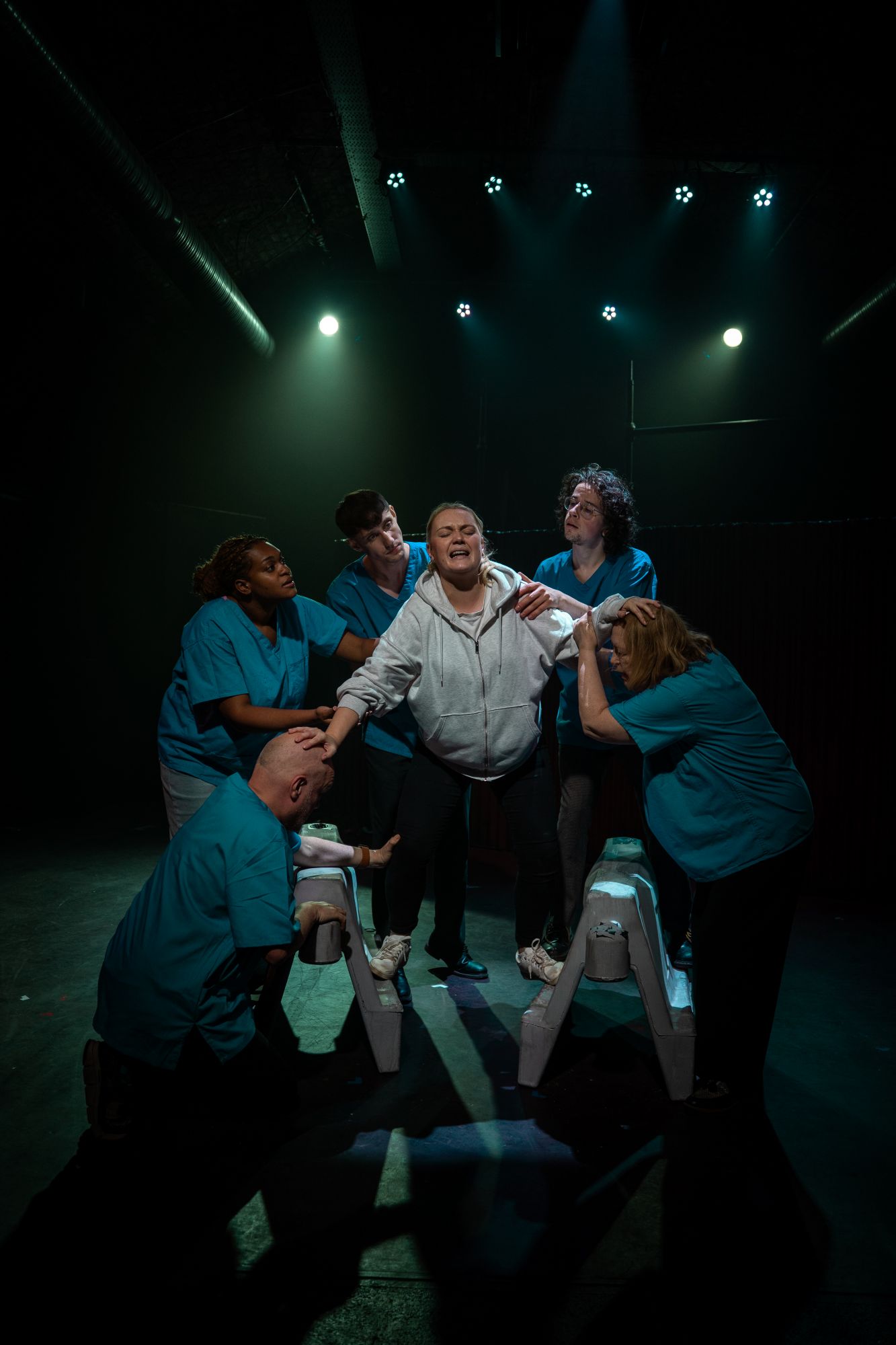
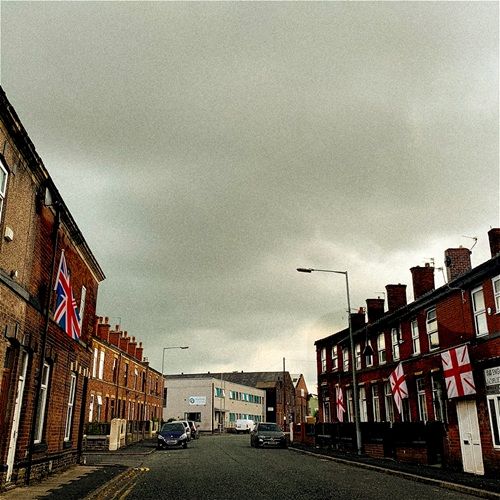
Ancestors, was developed by Mark Smith as an exploration into the term ‘home,’ and how the same house can mean something different to the individuals that choose to inhabit the same space over time. Running through a timeline from the 1940’s, 1970’s, 1990’s, to the 2000’s, the company improvises life during their given period in time, to join together to make an ancestral history of 11 Oxford Road. Twelve improvisers have spent eight hours together in total, most of them did not know each other before this show, and then they performed the show the next day.

Photo credit – Andrew Ab Photography
Rehearsals
I was eager to see how the show developed, so being in the rehearsal space gave me an insight into how the director/performer relationship dynamic works in improv. I should point out at this point, that this overview is given from the perspective of a person with no improv performance experience, as I wished to write about this from the perspective of an audience member gaining a greater understanding of the behind the scenes of improvisation. Given that this is an improvised show and not a scripted performance, I was interested how much structure a director would add to assist the players with their choices, the company had already worked during the morning, so I was able to see them putting the final touches to the show, and a run through.
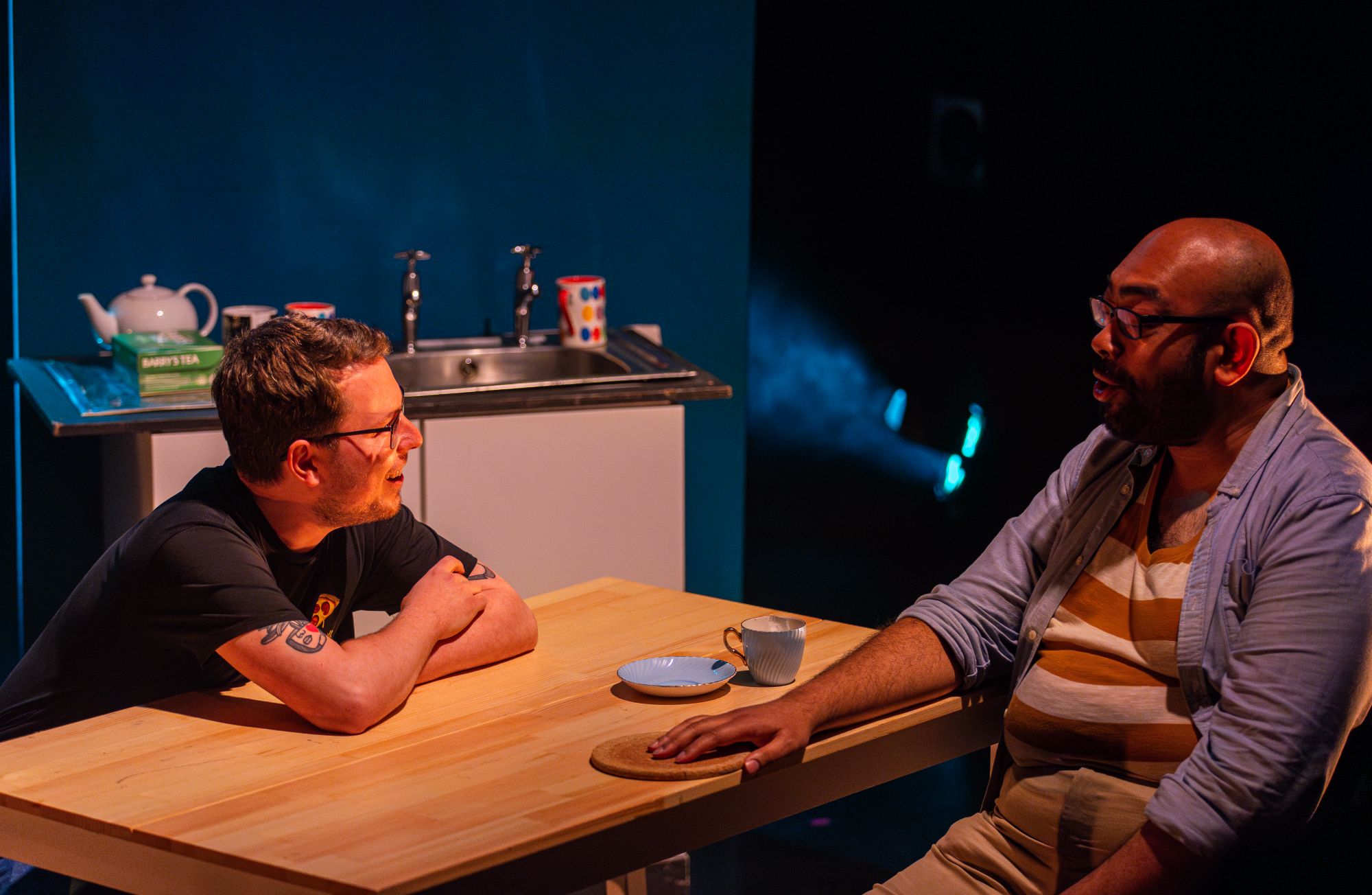
One thing that we take for granted, is that for scripted performance, entrances and exits will have been rehearsed consistently, so the director (Mark Smith), asks the company to walk around the stage (which is a mock-up of what they will face during the performance) for a few minutes so that they recognise their surroundings, and ensure that they treat their surroundings as familiar during the performance…this is supposed to be their home, after all! Advice given before they begin is to give each space, leave a trail of breadcrumbs for each other, timelines must not cross (there is no internet in the 1940’s for example), and to grow relationships. All sound advice, and a lot to process as well as producing material quickly during the performance. Just to paint a picture of the stage that the performers were to inhabit – there was a kitchen space with table and chairs and kitchen sink unit; living room space with settee; and bathroom with toilet. The run through was interesting to see the groups building quite different relationship dynamics, I little nervously in places, but it was all still very new to them. On to the performance the next day…

Photo credit – Andrew Ab Photography
Performance
Sitting down to watch the performance, I crossed my fingers for the group, that they would transfer what they had experienced in rehearsals to the stage on performance day. The performers were: Terje Brevik, Ray Billington, Kristin Elliott, Juwel Hague, Babette Hinterleitner, Laura Kennedy, Derbail Kinsella, Hal Munger, Erik Ostrom, Kieran Sands, Matt Sparkes, Dani Taffijn and Fergus Wynne. I need not have worried, they surpassed what I had imagined, no doubt by the warm welcome that Liverpool offered them. Obviously, I had already seen the afternoon’s run through, and I wondered whether it would be tempting for them to stick with the stories that they developed the day before, but no story was the same, each unfolded organically, and ideas and performances had deepened, and had become more interesting. Each time-period was performed in rotation, running from 1940’s through to 2000’s, and then repeated again twice, to build on the back story.
The 1940’s group were a Mum, Dad, and daughter, living in war-time Britain, with the women going out to work, while Dad had been to war, but now faced having to find a job, whilst his wife and daughter brought home the family income. We gather that Dad is finding his new domestic arrangement difficult due to him not being able to work out how to take the lid off the teapot! We gather that this is set post-war, as they discuss now being able to see other people’s lights on. Daughter Mildred, faces the reality of men returning from war, and wanting their jobs back – she is laid off from her job at the factory.
As we head into the 1970’s, we must remember, that women had the vote at this point, but their financial independence came later during the mid-1970’s when the Sex Discrimination Act 1975, prevented banks from requiring a husband to be guarantor/signatory on any mortgage/loan…just to put a bookmark in the timeline. A female friend is staying in her friend’s house and is excited about her new job at a bank…did you know Gerald a few doors down is overdrawn! Her excitement soon changes as her boss sexually harasses her, and she is sacked from her job. But, on the bright side A &E said her fractured wrist would mend quickly (allusions to her having socked it to him). The women have bought extra bras for the March the next day, and there is another loo roll shortage emergency requires a hasty dash into the loo with supplies!
1990’s – oh young ones…this is the era of video tapes, and the joy of being able to tape your favourite show so that you can watch it later, only to find that it has been recorded over by another member of the household. But never mind that, love is blossoming from within, and two of the housemates have fallen for each other, and you know what they say – two is company, and three is a crowd, especially when it is within your home. Spice World is pretty great! If they make a sequel, I hope they go to outer space! A marriage proposal, and an offer to their room mate to be their best man is a lovely ending to this section.
2000’s – come into the Party Palace, 11 Oxford Road is now a party house, and hangovers are guaranteed! Hygiene is not guaranteed however, and with a permanent hangover, tidying and cleaning are a luxury, and cockroaches in the tea cups are normal.
The rehearsal process enabled the performers to explore the genre, gain direction from Smith as to the outcome that he wished to achieve from the show, and the pre-show efforts helped the improvisers enormously. They presented an improvised performance, but with a structure that gave this made-up-on-the-spot piece, a feeling of theatre, and storytelling, which was interesting and heartwarming.
The festival is over now, but I highly recommend keeping an eye on their website for announcments for next year, or follow their social media to keep a look out for announcements – https://www.liverpoolimprovfestival.com/.